OLIVE GROVE & OIL
INSPIRA Farm: Produce & Permaculture
Looking after an olive grove and making top quality olive oil is an art. It's part of a millenary culture and tradition, particularly in Tuscany, where one of the best oils in the world is produced. And it's no coincidence.

Our Olive Oil

~ An olive oil for those who appreciate the difference ~
Tuscan olive oil is known for being one of the best in the world. The flavor is uniquely aromatic, a bit bitter and spicy, with a distinct greenish color when freshly pressed.
Why our INSPIRA Oil? Because our Extra Virgen Olive Oil (EVOO) is:
-
certified organic
-
filled with the many health benefits characteristic of a top EVOO.
-
100% traceable and produced with love at small scale in Southern Tuscany by two Swiss in love with this traditional product.
-
timed carefully for harvest. The olives are pressed cold the same day.
-
filtered and bottled in an elegant black glass to ensure its freshness, avoiding oxygen and light.
-
bottled in a practical size of half-liter, perfect for a gift you can feel proud of.
-
especially good as a “finishing” oil. It's rich flavor will complete every dish.
When you buy our oil, you support our work as stewards of this cultural tradition and land, which we strive to preserve and regenerate it using permaculture.
Our Grove

Traditional methods to care for the olive trees, harvest the olives and press the oil is a dying art we want to keep alive. Many farmers can't compete with more commercial and highly mechanical methods, that are unfortunately very aggressive on the trees and soil, not to mention highly dependent on the use of chemicals (herbicides, pesticides, fungicides, etc.). Thankfully, some remain true to traditions and for them it’s a matter of culture and heritage. Many still just produce for their own consumption and a small distribution to local restaurants. Especially in this region, olive oil is ever present. And it is heavenly.
Our oil is produced with outmost respect for the wellbeing of the trees, the soil and the entire ecosystem. We found a happy balance between traditional care and harvest of the olives and modern techniques to press the olives. At the end of the season, we are proud to produce an organic, pure and most healthy tasteful oil. One we are sure you will absolutely love and appreciate on every meal.
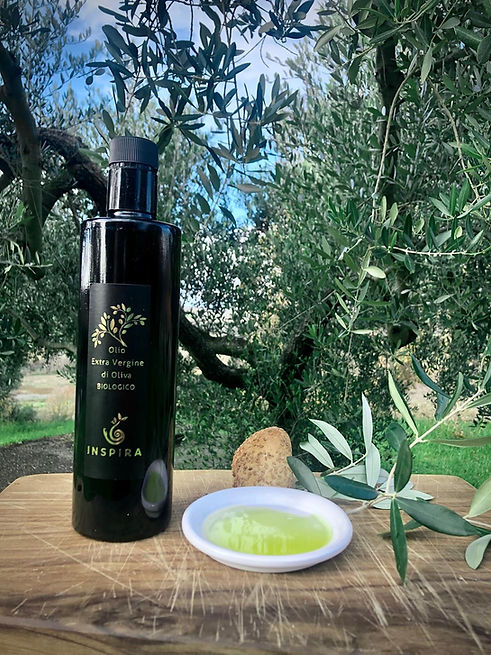
OUR OLIVE OIL
This beautiful organic farm was already producing a very high quality extra virgin olive oil when we bought it. The climate and soil and the topography are key, and in addition the care for the plants, the fruits, as well as the harvest, the pressing and the storage are further important elements of this art. This was all new to us when we took over our farm a year ago, and it quickly became a passion, as well as a key part of our permaculture farm. We also became the pupils of our passionate and very experienced olive tree loving neighbors, which allowed us to make a top quality Organic Extra Virgen Olive Oil on our first year (2025) already.
Whether you’re a seasoned chef or a home cook, understanding how olive oil is made can inspire you to appreciate its nuances and versatility. Discover the fascinating world of olive oil and why this so called "liquid gold" deserves a special place in your kitchen.

EVOO
When is it “Extra Virgen” Olive Oil (when not)?
The definition of an Extra Virgen Olive Oil (EVOO) is strictly regulated by a series of European and Italian laws that ensure its quality, authenticity, and safety for consumers. It is not just a commercial label, but an actual certification that attests to a virtuous production process and a flawless chemical-physical and organoleptic profile.
EVOO is defined as "olive oil obtained solely by mechanical or other physical means under conditions that do not alter the oil in any way, and which has undergone no treatment other than washing, decantation, centrifugation, and filtration." Its compounds must also meet specific organoleptic and chemical-physical standards that clearly distinguish it from other oils.
In layman terms, “Virgen” stands for pure or unrefined. Meaning that it is made from the first 'virgin' press of the fruit and it generally also means that no heat was used during the extraction process (you will often read the oil was ‘cold-pressed’). This preserves the polyphenols, which are highly beneficial compounds found in the olives.
Only “Virgen olive oil” (not “extra”) allows slightly broader limits for some chemical and sensory parameters, permitting minor defects.
Less qualitative olive oils are refined oils derived from a virgin oil whose acidity characteristics and organoleptic flaws make it unfit for direct consumption (require refining). Plain “Olive Oil” is a blend of refined and virgin oil, and “Pomace olive oil” is obtained from the solid residue from olive pressing. The "extra virgin" label is thus the most rigorous and sought-after classification. Deemed the highest quality, you can expect to pay more. It is characterized by a stronger flavor and is darker in color.


BENEFITS IN MY KITCHEN
Olive oil not only enhances the flavor of your meals but can also elevates your cooking experience to a new level, and not to mention your health! Olive oil is a much more versatile ingredient than what many know it for. It’s perfect for sautéing vegetables, drizzling on salads, soups, pasta, fish, chicken or meat, of course. It is also a pleasure simply dipping your fresh bread in it, or even include it in your desert recipes. Many chefs rely on high-quality olive oil to elevate their culinary creations. Its rich taste adds depth and complexity, turning simple meals into gourmet experiences.
Using Extra Virgen Olive Oil instead of butter in recipes adds nutrition without sacrificing flavor. Eating it regularly can contribute to longevity, making it more than just a tasty addition to your meals. (see links to medical sources below)
Should I be heating my olive oil to cook with?
Olive oil is made up of different fats, yet the predominant type is the mono-unsaturated fatty acid (M.U.F.A.), which is more resistant to the damaging changes incurred when oil is heated. In fact, oleic acid (the predominant MUFA found in olive oil) is 50 times less likely to oxidise (create harmful substances called free radicals) than linoleic acid (the main fat found in poly-unsaturated (PUFA) vegetable oils like sunflower and corn oil). This makes olive oil a healthier choice for shallow frying, grilling or baking.

HEALTH BENEFITS
Besides its unforgettably delicious flavor, olive oil brings along numerous health benefits. It is a key component of the famously healthy Mediterranean diet. And the reason for this is that it is packed with antioxidants, which combat oxidative stress in the body.
Many studies suggest that olive oil may help lower LDL (bad) cholesterol and increase HDL (good) cholesterol, promoting the health of your heart and circulatory system. Extra Virgen Olive oil, contains anti-inflammatory properties that support overall wellness. Why is this important? Well, inflammation is thought to be one of the key drivers behind some of our chronic health problems, including Alzheimer’s and type 2 diabetes, and even impotence.
Furthermore, Extra Virgen Olive Oil consumption has been linked to cancer prevention in many studies, in particular prostate and colon cancers, as it is rich in at least 30 plant defense chemicals called polyphenols, especially oleocanthal, oleuropein, hydroxytyrosol and tyrosol. Olive Oil is also a useful source of protective nutrients like vitamin E.
Interesting additional fact, oleocanthal appears to share the same pharmacological activity as ibuprofen, and acts as a natural anti-inflammatory. Interestingly, this useful property has been associated with positive changes in those with rheumatoid arthritis.
To all of this we say: Salute! And always have EVOO on your table and kitchen.


OUR OLIVE GROVE


HERITAGE
Our farm has close to 800 olive trees. Half are 30-year-old, and the rest are about 4 years of age. We care for the grove using traditional organic methods, while we semi-modernized the harvest with gentle tools and use a highly modern external press for the final step of our oil our production. It is important for us to keep the traditional olive oil production alive as much as possible, and thus only look to expedite the parts of the process that make sense, in a way that is most respectful towards the trees and the soil. The intent is to produce the highest quality in an environmental respectful way, and applying permaculture principles and techniques where possible.
WHAT MAKES A GOOD EXTRA VIRGEN OLIVE OIL
CARING FOR THE TREE STARTING WITH PRUNING
A good answers requires us to start from the beginning. The first thing one needs to learn is of course, to care for the olive grove. Sounds simple enough, but it’s an art and more work than one might think. A key activity is pruning! We studies the topic carefully, although everyone had a different approach and swore that theirs was “the right one”. To our good luck, Giovanni, our 79 -year-old neighbor (R.I.P.) had a passion for olive trees. He showed us how it’s done. It was amazing to see him climbing on those trees, with his clippers and a big sharp saw-knife. With our little Italian and keen observation of his demonstrations, some trial and error (we had him behind us going “No! Madonna!” or “Bravo! Si! Bellissimo! Buon Lavoro!”) we got the idea. He was so proud of us!
A good pruning will ensure the tree has no dry branches, no branches growing into each other, no branches towards the middle and enough fine pruning that the tree in the end has enough light (to allow for a healthy production of olives) and air (to avoid fungi and other sicknesses). The main stem and the new branches should be kept low to facilitate the harvest of the olives. Finally one takes out any “suckers” and look to eliminate any competing young trees from invading the roots area. For example, we had a lot of young oaks growing under our olives. The pruning is best done at the end of the Winter, so the tree is still “dormant” and getting stronger by the increasing temperatures and sun available. It took us, and especially Mark some ___ days and ____ cuts (fun fact: his electric clipper counts the number of cuts).


GOOD SOIL MAKES HEALTHY TREES
Of course, looking after the soil quality is “conditio sine qua non”. Unfortunately many farmers run through their fields with tractors that turn over the soil in order to “air it” and get rid of the grass... and unknowingly, they are killing also the soil’s microorganisms, which are the very thing that makes a soil rich in nutrients. This means the soil is often dry, with little to no life on it, and will wash out by the rain water, leaving a hard thin layer of actual soil. A good way to keep the soil healthy is to use cover crops to keep the soil alive. Using legumes as cover crops or actually “interfilliera” (in between rows), we can ensure a good amount of nitrogen being fixed onto the soil by the plants, which is highly beneficial for the trees.

"PESTS" AND CO.
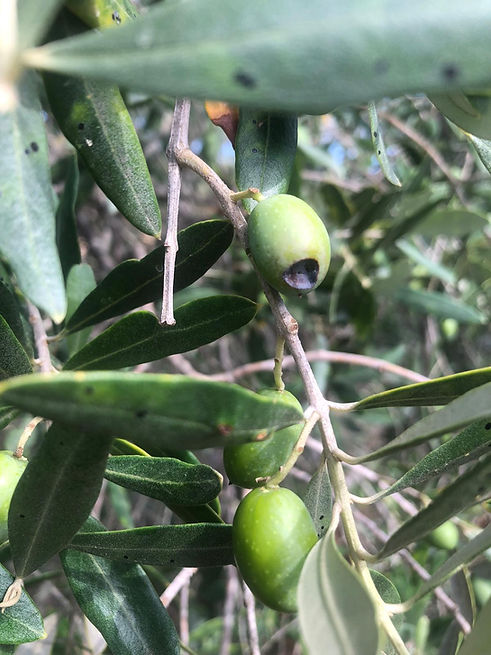
During Spring and Summer one has to watch out regularly for different types of pests and fungi, but if one has a healthy bio-diversity, the pests should be kept in check naturally. There is the big spoiler “pest” that all olive farmers fear: the mosca (the olive fly). This tiny fly can single handedly ruin the quality of your olives within a couple of weeks if they manage to infest your grove, to the point of loosing the entire harvest. Non-organic farmers will use all sorts of pesticides and deterrents. Organic farmers are very limited in terms of what strategies to use, but there are some and the main one is: observation and monitoring and reacting early.


THE RIGHT TIME TO HARVEST
Come September-October, if it was a good Summer, with a good balance of rain and sun, the olives will have reached their maturity and have now the highest oil content. It’s time to harvest! Alternatively, if left on the tree for a longer time, the olives you harvest may be larger and heavier “weight” but much of it will be water and not necessarily oil.
THE HARVEST!
The olive harvest, like the grape harvest for wine, is a team effort and surely not a walk in the park, but it is fun and very satisfying work. The olives have to be picked fast and they have to be taken to the press that same day or they will start to ferment.

OIL PRESSING
Pressing olives for oil combines tradition with purposeful craftsmanship. This process is done for us at a modern local “Frantoio” or olive press. There the olives we bring in crates are checked for quality, weighed and logged into the system. Then the olives are washed and sorted to remove dirt and debris, leaves and stems. This step ensures purity in the final product. Once cleaned, the olives are crushed into a paste and separated from the pips.
Traditional vs. Modern techniques
There are various methods for pressing olives, each with its benefits. The traditional stone mill crushes the olives slowly into a paste, allowing rich and aromatic flavors to develop. Compared to modern techniques this is more time consuming and less efficient, as well as more time and energy consuming, so it’s less common today. The traditional method requires skill and patience, but provides a deeper connection with the oil production, which many appreciate for its authenticity. It’s surely a more personal approach to oil-making.
Modern press machines bring speed and efficiency to the olive oil production. They are easier to maintain from a hygiene perspective, and they ensure a higher level of consistency in the quality of the oil. Modern presses use either hydraulic pressure to quickly crush the olives and extract the oil, or use centrifugal force to spin the olive paste rapidly and separate the solids from oil and water.
The modern machines produce rich, flavorful oils, in a fraction of the time, so they are the more widely used technique today.
After separating the oil, it is filtered (or not) and controlled for acidity levels and other markers. A typical Tuscan oil has an almost glowing green color when freshly pressed. The oil is stored in large steel containers or bottled directly to minimize the contact with oxygen and light.
And so, the INSPIRA Organic Extra Virgen Olive Oil is ready for your next purchase and more than anything, ready to raise any dish you pour it on to.

SOURCES
BBC article “Is olive oil healthy?” Jan 2025
https://www.bbcgoodfood.com/health/health-benefits-olive-oil
European Journal of Clinical Nutrition “Extra virgin olive oil: More than a healthy fat”
https://www.nature.com/articles/s41430-018-0304-x?proof=t
US National Library of Medicine / National Center for Biotechnology Information Articles:
-
“Phytochemistry: ibuprofen-like activity in extra-virgin olive oil”
https://pubmed.ncbi.nlm.nih.gov/16136122-phytochemistry-ibuprofen-like-activity-in-extra-virgin-olive-oil/ -
“Major phenolic compounds in olive oil: metabolism and health effects”
https://pubmed.ncbi.nlm.nih.gov/12550060/ -
The Mediterranean diet, its components, and cardiovascular disease”
https://pubmed.ncbi.nlm.nih.gov/25447615/